
Why Ponding Water on Your Flat Commercial Roof Is a Bigger Problem Than It Looks
September 16, 2026
•
Written By
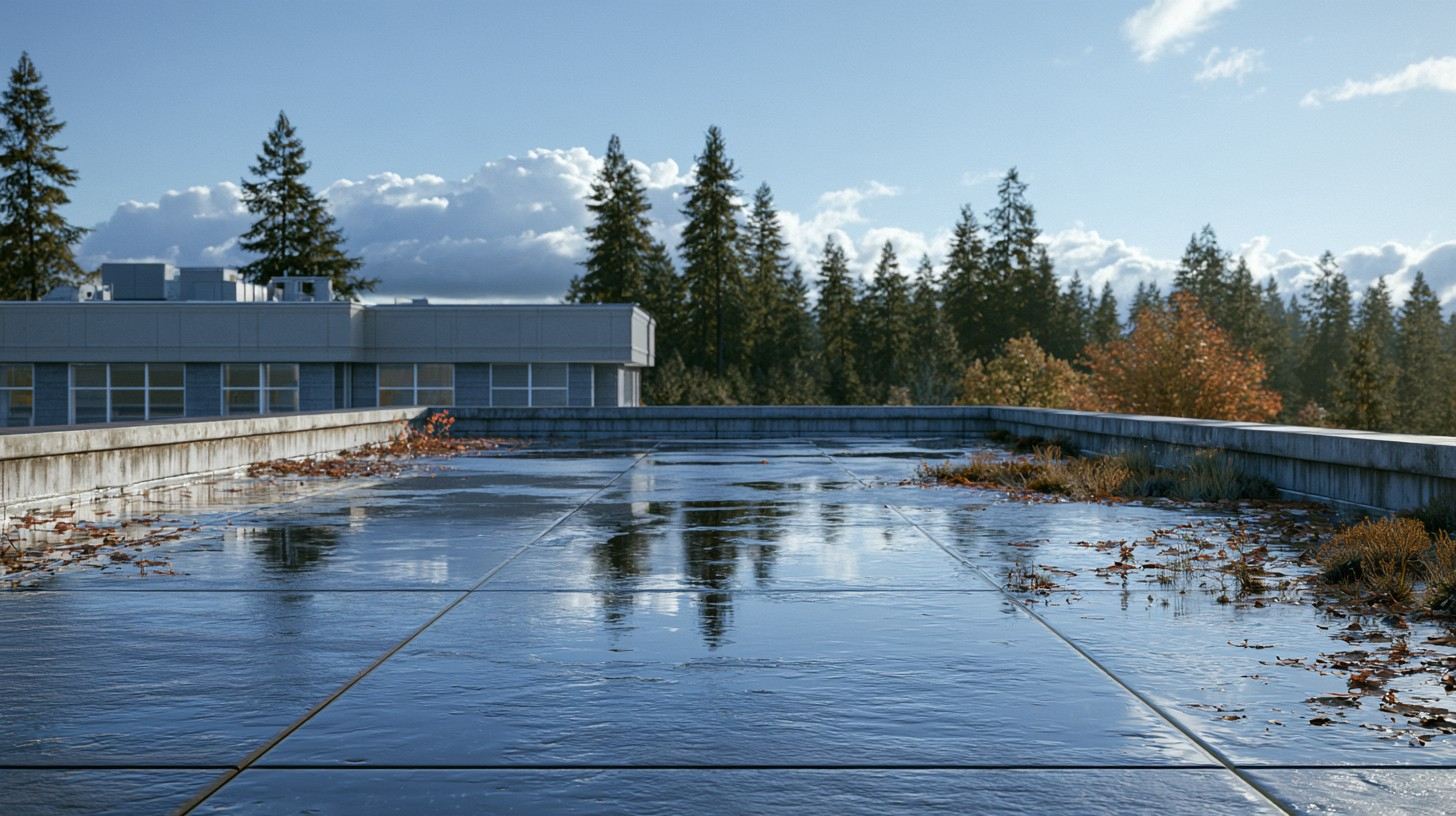
If water is still sitting on your commercial roof days after the rain stops, pay attention. Flat and low-slope roofs are designed to move water toward drains, not hold onto it.
Here in the Pacific Northwest, where one rainy day can quickly turn into a rainy week, poor drainage can put extra stress on your roofing system and turn small problem areas into leaks, damaged roofing materials, and more expensive repairs.
At Diamond Roofers LLP, we specialize in flat and low-slope roofing throughout the Puget Sound region. Here’s what commercial property owners should know about ponding water, why it happens, and when it’s time to have a roofer take a closer look.
Key Takeaways
- Water still standing more than 48 hours after rain is the industry threshold for a real drainage problem, not just a puddle.
- A single inch of ponding water across a 1,000-square-foot section adds over 5,000 pounds of concentrated load to a roof structure.
- Ponding accelerates membrane breakdown, especially at seams, and undocumented, unaddressed ponding can be used to void a manufacturer's warranty.
- Most ponding issues are drainage problems that can be fixed with tapered insulation or drain repair, not automatic full roof replacements.
What Counts as Ponding Water?
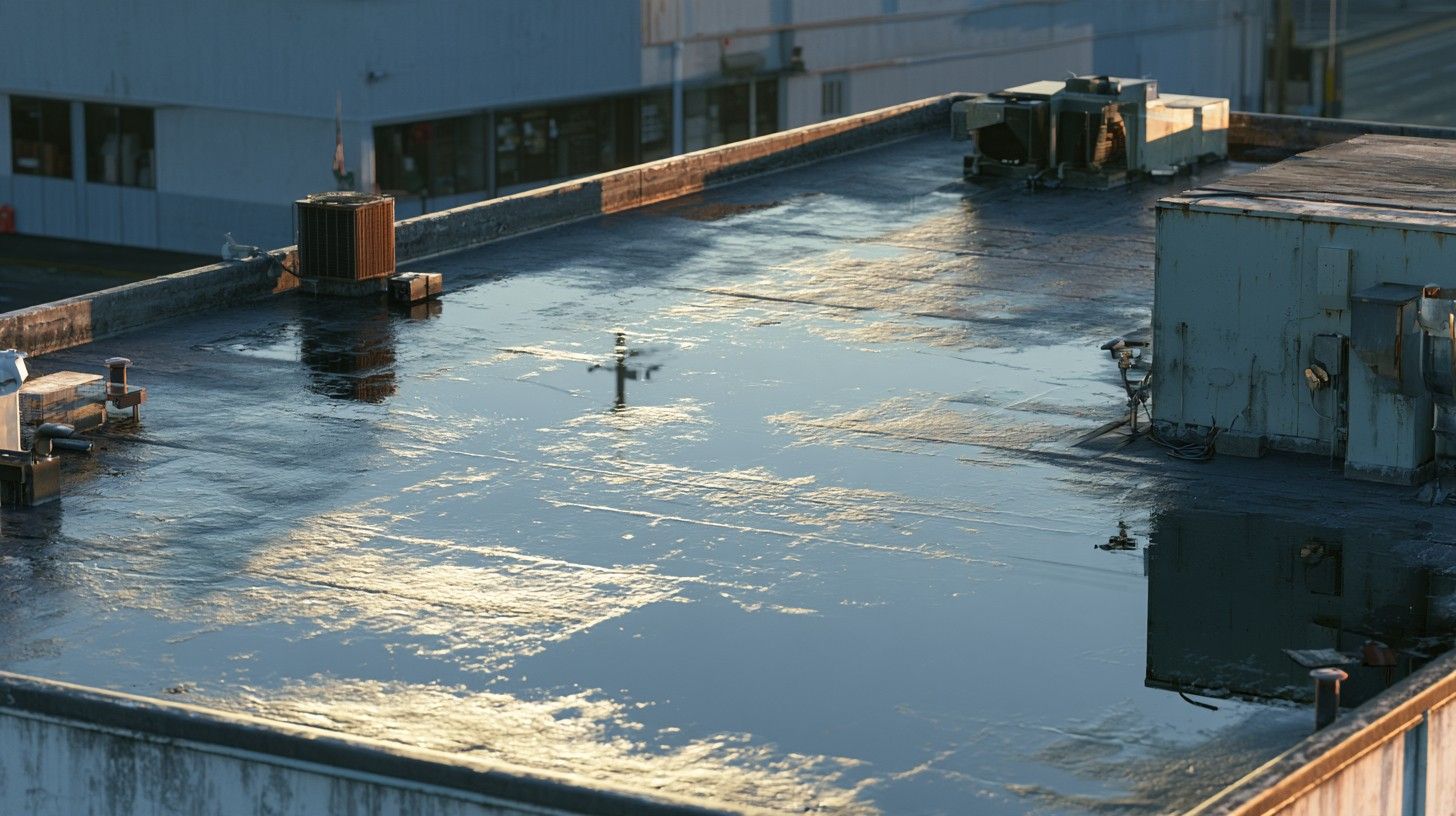
Industry standard defines ponding water as any water that remains on a flat or low-slope roof for more than 48 hours after a rain event. A little water sitting for a few hours after a storm is normal, but water that's still there two days later is a sign your roof's drainage isn't doing its job.
In the Puget Sound region, where fall and winter bring long stretches of consistent rainfall rather than isolated storms, a drainage problem doesn't get a chance to dry out between rain events the way it might in a drier climate. That makes ponding water a more persistent, more damaging issue here than in regions with less consistent precipitation.
Why Ponding Water Is a Real Structural Risk
Ponding water may not look like an urgent problem, especially if there isn't an active leak. But the longer water sits in the same areas, the more stress it can put on both the roofing system and the structure underneath it.
Here's what can happen when drainage problems go unaddressed.
Weight Adds Up Fast
Water weighs roughly 5.2 pounds per square foot per inch of depth. A modest pond just an inch deep across a 1,000-square-foot section adds over 5,000 pounds of extra load on your roof structure. That weight isn't evenly distributed, which concentrates stress in specific spots.
It Accelerates Membrane Failure
Standing water breaks down roofing membrane materials faster than normal weathering, especially at seams and around any existing minor damage. This applies to TPO and PVC membrane systems, which are common on Puget Sound commercial flat roofs, as well as to older built-up and modified bitumen systems.
What starts as a small vulnerability becomes a leak point much faster under standing water than it would under normal rain-and-drain conditions.
It Creates A Feedback Loop
As a roof deflects slightly under standing water's weight, that same spot often becomes the new low point. That means more water collects there next time, deepening the problem with each rain event instead of resolving on its own.
UV And Biological Growth Accelerate
Standing water that doesn't drain becomes a breeding ground for algae and moss, which further degrades roofing material and can clog what drainage does exist. In a climate as wet as Seattle's, this growth cycle can establish itself faster than building owners expect.
What Causes Ponding Water On Your Flat Roof?
Ponding water usually isn't caused by the roofing membrane alone. In most cases, something is preventing water from moving toward the roof's drains as intended. A few of the most common causes we see on flat and low-slope roofs include:
- Insufficient slope: Flat roofs aren't perfectly flat. They're built with a slight intentional slope (typically 1/4 inch per foot) toward drains, and settling, poor original construction, or structural changes over time can flatten that slope in spots.
- Clogged or undersized drains: Debris, roofing material breakdown, or drains never sized correctly for the roof's actual rainfall load. In the Pacific Northwest, falling leaves and evergreen needles are a year-round source of drain-clogging debris, not just a seasonal fall problem.
- Structural deflection: Age and the cumulative weight of prior ponding events can cause the roof deck itself to sag in low spots.
- Rooftop equipment additions: HVAC units, solar arrays, or other equipment added after the original roof was installed can alter water flow patterns across the roof surface, sometimes creating new low points that weren't part of the original drainage design.
How to Spot Ponding Water Before It Becomes a Bigger Problem
Regular roof inspections are one of the best ways to catch ponding water before it leads to leaks or more extensive damage. Some warning signs are visible on the roof itself, while others may show up inside the building.
Watch for signs such as:
- Standing water: Water is still visible more than 48 hours after the last rainfall.
- Membrane discoloration or staining: Repeated pooling can leave noticeable marks where water regularly collects.
- Visible sagging or low spots: Dips in the roof deck can indicate areas where water is repeatedly settling.
- Moss or algae growth: Growth concentrated in certain areas may indicate that those sections of the roof stay wet longer than they should.
- Ceiling stains: Water stains inside the building can be an early indication that moisture has made its way through the roofing system.
- Musty odors: Persistent damp or musty smells below an area where water collects may point to moisture intrusion.
- Increased indoor humidity: Unexplained humidity inside the building can sometimes be connected to an ongoing roof leak or moisture problem.
If you're seeing one or more of these signs, especially after repeated rainfall, schedule a professional roof inspection to find the source of the drainage problem before it worsens.
What to Do If You Have Ponding Water
Finding ponding water on your roof doesn't automatically mean you need a full roof replacement. The right solution depends on what's causing the water to collect and how long the problem has been developing.
If you notice water repeatedly sitting in the same areas, here are the next steps.
Don't Just Wait For It To Drain
If it keeps happening in the same spot, that's a pattern, not bad luck.
Get A Professional Roof Inspection
A real assessment identifies whether this is a drainage issue (often fixable without a full roof replacement) or a structural deflection issue (which needs a more involved fix).
Consider Tapered Insulation
For roofs with genuine low spots, tapered insulation systems can correct drainage without a full roof replacement, directing water to existing drains more effectively.
Check And Clear Drains On A Regular Schedule
Not just after a visible problem shows up, in a climate with as much year-round precipitation as the Puget Sound region, drains benefit from more frequent checks than the industry-standard twice-a-year recommendation used in drier climates.
Address It Before Your Next Roof Replacement, Not During
If ponding is a known issue, it should be part of the conversation before any reroofing project, not discovered afterward when the same problem reappears on a brand new roof.
How Does Tapered Insulation Fix Ponding Water?
Tapered insulation systems correct drainage without altering the roof deck itself. Instead of a uniform thickness of insulation across the whole roof, a tapered system is installed in a calculated pattern that's thicker in some areas and thinner in others. That creates a slope toward existing drains, where the original roof design didn't have enough pitch to begin with.
A qualified roofing contractor maps the roof's low points first, usually during a flat roof's assessment, then designs a taper layout specific to those low spots rather than applying a generic slope across the entire roof. This targeted approach means only the areas that need correction get built up, which keeps the project more cost-effective than if the whole roof needed to be re-pitched.
Tapered insulation is typically installed during a full roof replacement or a significant re-cover project, since it requires removing the existing membrane to install the new insulation layer underneath it. For a roof that isn't due for replacement yet but has a persistent, isolated ponding spot, a contractor may recommend a smaller, targeted tapered insulation repair instead of waiting for the whole roof's replacement cycle.
What Does a Professional Roof Drainage Assessment Involve?
A proper drainage assessment goes beyond a quick visual check for standing water. A contractor experienced with commercial flat roofs typically starts by mapping where water collects after a rain event, sometimes returning after a storm to document real conditions rather than relying on a dry-day inspection alone.
From there, the assessment reviews the roof's existing drains: whether they're clear, whether they're sized appropriately for the roof's actual square footage and the region's rainfall volume, and whether their placement matches where water is pooling. It's common to find that a roof's original drain layout was adequate when installed but no longer matches how water moves across the roof after years of minor structural settling.
The final piece is distinguishing a surface-level fix from a structural one. A reputable roofing contractor should be able to tell you clearly whether a specific low spot is caused by insufficient slope (fixable with tapered insulation), a clogged or undersized drain (fixable with drain work), or actual deck deflection (which needs a more involved structural evaluation). Getting that distinction right the first time saves a building owner from paying for the wrong fix.
Frequently Asked Questions About Ponding Water on Flat Roofs
How long can water safely sit on a flat commercial roof?
Industry guidance treats water still standing after 48 hours as a drainage problem worth investigating, even if there's no visible damage yet.
Can ponding water void a roof warranty?
It can, depending on the manufacturer and the specific warranty terms. Many commercial roofing warranties require the building owner to maintain proper drainage, and documented, unaddressed ponding can be used to deny a claim.
Is ponding water always a sign I need a full roof replacement?
No. Many ponding issues are drainage problems that can be corrected with tapered insulation or drain repairs, not a full replacement. A professional inspection is the only reliable way to tell which situation you're dealing with.
How often should a flat commercial roof be inspected in the Puget Sound area?
Given the region's consistent year-round rainfall, more frequent inspections than the standard twice-a-year schedule are worth considering, especially for roofs with a known history of drainage issues.
How Diamond Roofers LLP Can Help
Diamond Roofers LLP has specialized in flat and low-slope commercial roofing throughout the Puget Sound region. If you're seeing standing water that doesn't drain within 48 hours, we'll do a real inspection and give you an honest read on whether it's a drainage fix or something more involved.
Call Diamond Roofers LLP or request a free estimate online.
Recent Articles
Why Ponding Water on Your Flat Commercial Roof Is a Bigger Problem Than It Looks
September 16, 2026

Commercial Roofing
Why Mercer Island Businesses Need Roof Maintenance
A maintained commercial roof protects not just your building, but your inventory, your equipment, your tenants, and your liability exposure.
March 23, 2026
Commercial Roofing
Flat vs. Low-Slope Roofs in Tacoma, WA (Pros & Cons)
Flat and low-slope roofs are not the same thing, the difference in pitch affects drainage, material choice, and long-term performance significantly.
March 12, 2026

Commercial Roofing
Low-Slope Roofing Basics for Federal Way Buildings
This guide breaks down what low-slope roofing really is, why it behaves differently in the Pacific Northwest, and how to keep it performing year after year.
February 9, 2026