
Flat vs. Low-Slope Roofs in Tacoma, WA (Pros & Cons)
March 12, 2026
•
Written By
Diamond Roofers LLP
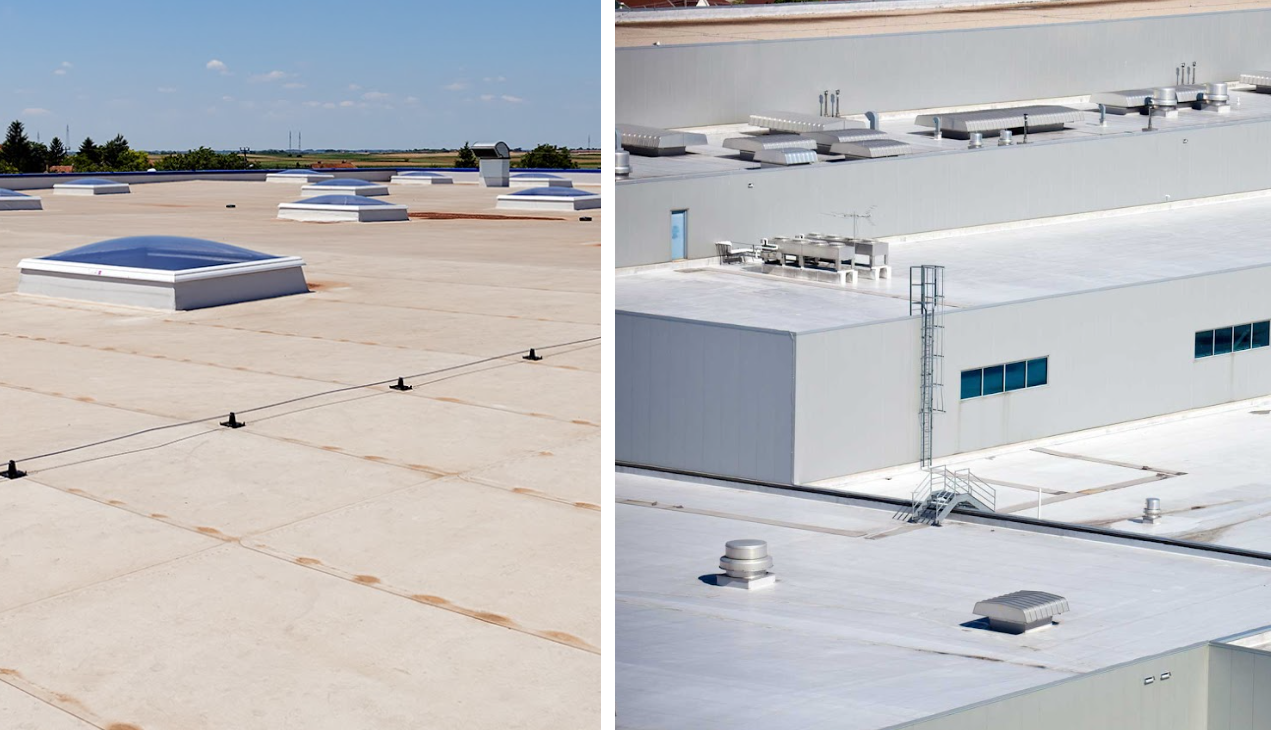
If you own a home or commercial building in Tacoma, Washington, chances are you've stood outside, looked up, and wondered whether your roof is actually built for this climate. The Pacific Northwest doesn't mess around — we're talking about months of relentless rain, wind-driven moisture, and the occasional heavy snowfall that reminds you just how much your roof is working overtime.
When it comes to low-pitch roofing, the two options you'll hear most about are flat roofs and low-slope roofs. They look similar from the street, but they behave very differently — and choosing the wrong one (or maintaining either one poorly) can mean leaks, structural damage, and repair bills that'll ruin your week.
This guide breaks it all down in plain language, so you can make a smart, confident decision for your property.
Key Takeaways
- Flat and low-slope roofs are not the same thing — the difference in pitch affects drainage, material choice, and long-term performance significantly.
- Tacoma's wet climate makes proper drainage the single most important factor in any flat or low-slope roofing decision.
- Both roof types have real advantages, but only when they're installed correctly and with the right materials for our region.
- Low-slope roofs generally outperform true flat roofs in the Pacific Northwest because they shed water more effectively.
- Regular inspections — especially after winter — are the best way to catch small problems before they become expensive ones.
- Working with a locally experienced roofing contractor makes all the difference when it comes to material selection and long-term performance.
What Exactly Is the Difference Between a Flat Roof and a Low-Slope Roof?
They're closer than you think — but the distinction matters
A true flat roof has virtually no pitch at all. Technically, it might have a tiny slope of around 1/4 inch per foot just to encourage some drainage, but for all practical purposes, it lays nearly horizontal. Low-slope roofs, on the other hand, pitch anywhere from 1/4 inch to 2 inches per foot. That might not sound like much, but in a city that sees over 38 inches of rain per year, that difference is enormous.
Both are common across Tacoma and the broader Pacific Northwest — you'll see them on commercial buildings, apartment complexes, retail spaces, and even many residential properties. They're popular because they're cost-effective to build, easy to access for HVAC and mechanical equipment, and they can even double as usable rooftop space.
The challenge is that neither forgives poor installation or neglect — especially not here.
What Are the Advantages of a Flat Roof in Tacoma?
Flat roofs offer real benefits, but they come with conditions
There's a reason flat roofs have been used in commercial construction for decades. The advantages are genuine and worth understanding.
Cost of installation tends to be lower upfront. Because there's less surface area to navigate and no steep pitch to work around, labor costs are typically reduced. For large commercial buildings, that savings can be substantial.
Flat roofs also make rooftop equipment — HVAC units, exhaust systems, solar panels — much easier and safer to install and service. If you own a commercial property in Tacoma, this is a practical day-to-day benefit that adds up over time.
Usable rooftop space is another draw. Some property owners in Tacoma use flat roofs for green roofs, rooftop gardens, or simple equipment staging areas.
That said, the trade-off in our climate is real: flat roofs are far more susceptible to ponding water. When rainwater sits on a surface with no meaningful pitch, it looks for any seam, any crack, any weak point to work its way through. Without a high-quality membrane and properly designed drainage, a flat roof in Tacoma is a slow-motion leak waiting to happen.

What Are the Advantages of a Low-Slope Roof in Tacoma?
For Pacific Northwest weather, low-slope roofs have a meaningful edge
Low-slope roofs split the difference between the accessibility of a flat roof and the drainage performance of a pitched roof. In a region like ours, that balance is genuinely valuable.
Here's what makes low-slope roofs worth considering for Tacoma properties:
- Water moves. Even a modest pitch gives rainwater a direction to travel, reducing the risk of ponding and the long-term damage it causes.
- They're still accessible. Unlike steep residential roofs, low-slope systems are safe and practical to walk on for maintenance and inspections.
- More material options work well. Low-slope roofs are compatible with a wider range of roofing membranes, including single-ply systems like PVC, which are excellent performers in wet climates.
- Energy efficiency potential. With proper insulation and a reflective membrane, low-slope roofs can meaningfully cut heating and cooling costs — something Tacoma homeowners and business owners are increasingly paying attention to.
- Longer lifespan when properly installed. A quality low-slope system, installed by experienced hands and backed by a solid warranty, can protect your property for 15 to 25 years.
For commercial properties especially, the commercial roofing services available today are specifically engineered for exactly these conditions. You don't have to settle for a roof that barely keeps up with Tacoma's weather — the right system is built to thrive in it.

What Are the Biggest Drawbacks of Each Roof Type in the Pacific Northwest?
Every roof has a weakness — knowing yours lets you stay ahead of it
No roofing system is perfect, and being honest about the limitations of each is the best way to protect your investment. Here's where both roof types can fall short in our climate:
Flat roof drawbacks:
- Ponding water is the primary enemy. Water that sits on a flat surface after rain — for 48 hours or more — accelerates membrane degradation and can eventually work into the structure below.
- Drainage systems require consistent upkeep. Scuppers, drains, and gutters on flat roofs must be kept clear of the leaves, pine needles, and debris that are a constant reality in the Pacific Northwest.
- Membranes can fail at seams. Flat roofs often have more field-applied seams, which are potential failure points if installation quality isn't top-notch.
Low-slope roof drawbacks:
- They still require quality installation and materials. A low-slope roof installed with the wrong membrane or poor drainage design won't perform any better than a flat roof — maybe worse.
- Foot traffic must be managed. Low-slope membranes can be damaged by foot traffic if workers or equipment aren't careful during maintenance visits.
- They can be mistaken for low-maintenance. They're lower-maintenance than many roof types, not zero-maintenance. Skipping annual inspections is still a gamble in Tacoma's climate.
The good news is that most of these drawbacks are entirely manageable with the right contractor, the right materials, and a consistent maintenance plan. A residential roofing or commercial inspection from a team that knows the Pacific Northwest's specific weather patterns is worth far more than a reactive emergency repair call at 11 PM during a November rainstorm.
What Roofing Materials Work Best for Flat and Low-Slope Roofs in Tacoma?
Material selection can make or break your roof's performance here
The material you put on a flat or low-slope roof matters as much as the design. In Tacoma's climate, the name of the game is waterproofing, durability, and seam integrity. Here's a quick overview of what's commonly used and how they stack up:
PVC single-ply membranes are among the strongest performers in the Pacific Northwest. They're highly resistant to moisture, UV rays, and punctures, and they're heat-welded at the seams — which dramatically reduces leak risk compared to systems that rely on adhesives or overlaps. Manufacturers like Duro-Last offer custom-fabricated PVC systems that minimize on-site seaming even further, which is a significant advantage in a wet climate. Systems like these can carry 15- to 25-year warranties when installed by a certified contractor.
TPO membranes are a popular and cost-effective single-ply option, also heat-welded, with good energy efficiency characteristics. They're commonly used on commercial buildings throughout the Tacoma area.
Modified bitumen is a multi-layer system that's been around for decades and still performs reliably when applied correctly. It's more labor-intensive to install but creates a thick, durable surface that handles heavy use well.
Built-up roofing (BUR) — alternating layers of bitumen and reinforcing fabric — is a classic option for commercial flat roofs. It's heavy, durable, and time-tested, though installation is more involved than modern membrane systems.
According to the National Roofing Contractors Association, proper material selection based on climate, slope, and use case is one of the top factors in long-term roof performance. In other words, what works great in Phoenix may not be the best call for Tacoma.
Straight Answers: Your Flat and Low-Slope Roof Questions, Answered
How do I know if my flat roof has a drainage problem? The clearest sign is water that's still sitting on your roof surface 48 hours after rain stops. You might also notice staining or rust streaks around drains and scuppers, or soft spots in the membrane. Inside, look for water stains on ceilings near exterior walls — those are often the first sign that water has found a way through.
How often should a flat or low-slope roof in Tacoma be inspected? Twice a year is the general recommendation — once in the spring after winter weather has done its damage, and once in the fall before the rainy season hits. After any major wind or storm event, a quick visual check of drains and seams is smart.
Can a flat roof be converted to a low-slope roof? In many cases, yes. Adding tapered insulation to an existing flat roof system is a common way to introduce drainage slope without a full tear-off. This can be a cost-effective solution that extends the roof's lifespan significantly. A professional assessment will tell you whether your building's structure supports it.
What's the typical lifespan of a flat or low-slope roof in the Pacific Northwest? With quality materials and professional installation, a well-maintained PVC or TPO membrane roof in our region can last 15 to 25 years. Modified bitumen systems typically last 15 to 20 years. The biggest variable isn't the material — it's whether the roof is inspected and maintained consistently.
Is a flat roof a bad idea for a residential property in Tacoma? Not necessarily, but it requires more diligence than a pitched roof. Residential flat roofs are common in mid-century modern and contemporary homes throughout the Pacific Northwest. With the right membrane, proper drainage design, and regular upkeep, they can perform reliably for decades. The key is never treating them as set-it-and-forget-it.
Your Roof Deserves Better Than a Gamble — Let's Get It Right
Here's the bottom line: flat and low-slope roofs both have a place in Tacoma. They're practical, cost-effective, and — when done right — genuinely built to handle what the Pacific Northwest throws at them. The difference between a roof that lasts 25 years and one that's leaking in five almost always comes down to who installed it and what went into it.
At Diamond Roofers LLP, we've built our reputation in the Pacific Northwest by doing this work with integrity. We know Tacoma's climate because we work in it every day. We know which materials hold up and which ones cut corners disguised as savings. And we know that a roof isn't just a building component — it's what stands between your property, your business, and everything the sky sends down.
Whether you're looking at a new installation, navigating a repair, or just want a straight answer about whether your current roof is in good shape, we're here for that conversation. No pressure, no runaround — just honest expertise from a team that actually cares.
Request a free estimate or reach out to us directly — we'd love to help you protect what matters.
Recent Articles
Why Ponding Water on Your Flat Commercial Roof Is a Bigger Problem Than It Looks
September 16, 2026

Commercial Roofing
Why Mercer Island Businesses Need Roof Maintenance
A maintained commercial roof protects not just your building, but your inventory, your equipment, your tenants, and your liability exposure.
March 23, 2026
Commercial Roofing
Flat vs. Low-Slope Roofs in Tacoma, WA (Pros & Cons)
Flat and low-slope roofs are not the same thing, the difference in pitch affects drainage, material choice, and long-term performance significantly.
March 12, 2026

Commercial Roofing
Low-Slope Roofing Basics for Federal Way Buildings
This guide breaks down what low-slope roofing really is, why it behaves differently in the Pacific Northwest, and how to keep it performing year after year.
February 9, 2026